
Types of Hair Transplants
Understanding the different hair transplant techniques is crucial for making an informed decision. Each method has its own advantages, recovery times, and ideal candidates.
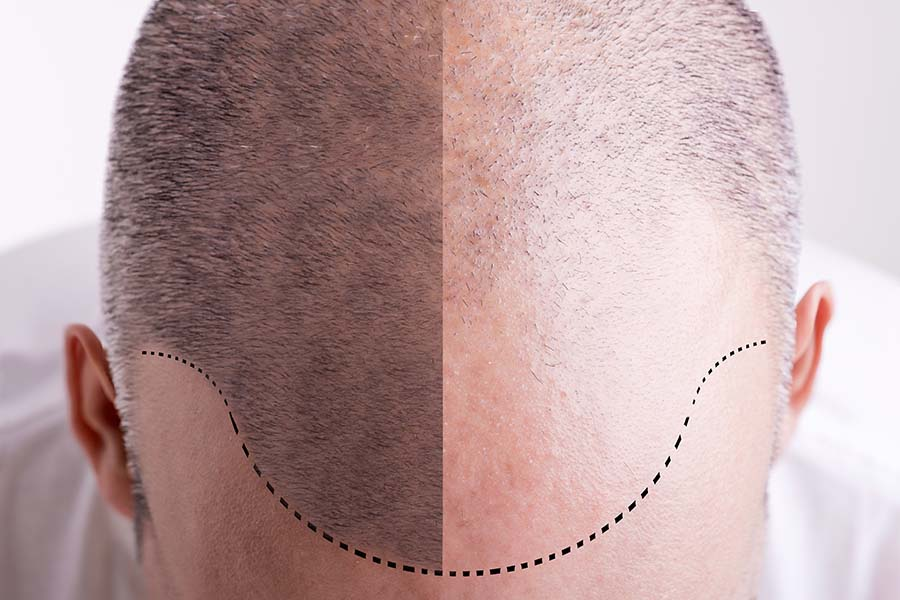
The donor area at the back of the head where hair follicles are extracted for transplantation
Quick Comparison
| Method | Recovery | Cost Range | Scarring |
|---|---|---|---|
| FUE | 7-10 days | $4,000 - $15,000 | Minimal (tiny dots) |
| FUT | 2-3 weeks | $3,000 - $12,000 | Linear scar |
| DHI | 7-10 days | $6,000 - $20,000 | Minimal (tiny dots) |
| Robotic (ARTAS) | 7-10 days | $8,000 - $25,000 | Minimal (tiny dots) |
Advantages
- +Minimal scarring - tiny dots instead of linear scar
- +Faster recovery time (usually 7-10 days)
- +Less post-operative discomfort
- +Can wear hair very short after healing
- +Good for smaller procedures
Disadvantages
- -More expensive than FUT
- -Longer procedure time
- -May require shaving the donor area
- -Lower yield per session compared to FUT
Best For
Patients who prefer short hairstyles, want minimal scarring, or need smaller procedures
Advantages
- +Higher graft yield per session
- +Lower cost per graft
- +Better for very large sessions
- +No need to shave the entire donor area
- +Established technique with long track record
Disadvantages
- -Linear scar in donor area
- -Longer recovery time (2-3 weeks)
- -More post-operative discomfort
- -Not suitable for very short hairstyles
Best For
Patients needing large numbers of grafts, those who keep hair longer, or budget-conscious patients
Advantages
- +More control over hair direction and angle
- +Faster healing of recipient area
- +Higher survival rate of grafts
- +Can achieve higher density
- +Less handling of grafts
Disadvantages
- -Most expensive option
- -Requires highly specialized training
- -Longer procedure time
- -Limited number of qualified surgeons
Best For
Patients seeking maximum density, those with specific aesthetic requirements, or those wanting the latest techniques
Advantages
- +Consistent, precise extraction
- +Reduced human error
- +Less fatigue-related variability
- +Quick harvesting phase
- +Detailed pre-operative planning
Disadvantages
- -Very expensive
- -Limited to certain hair types
- -Requires shaving donor area
- -Not available everywhere
- -Implantation still done manually
Best For
Patients who prefer technology-assisted procedures, want consistency, or have straight dark hair
Ready to Take the Next Step?
Now that you understand the different types of hair transplants, find a qualified clinic that specializes in the technique that's right for you.