
What Is DHT and Why It's the Real Reason You're Losing Your Hair
Understanding DHT — the hormone behind most male pattern baldness — changed how I think about hair loss and treatment options.
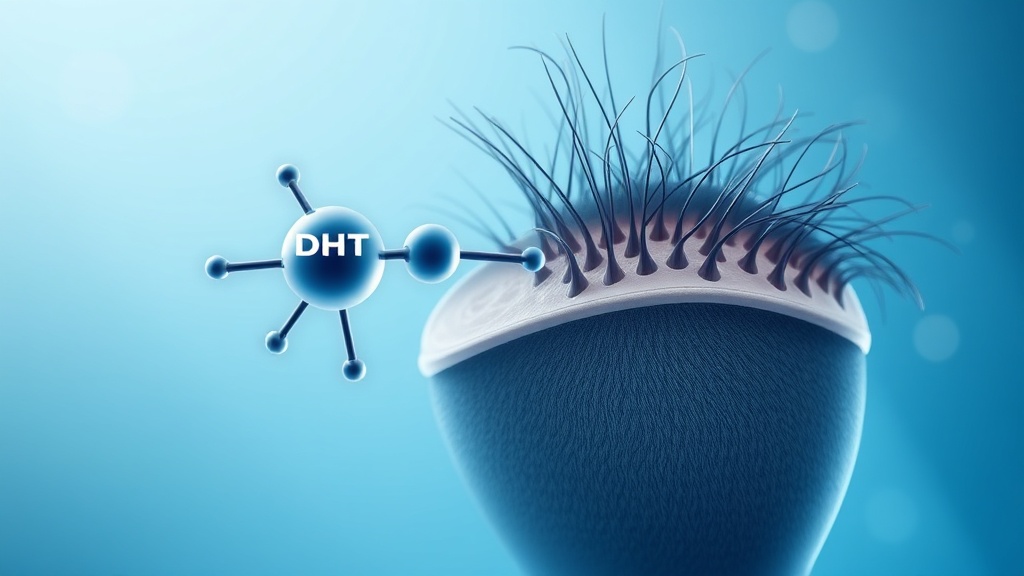
When I first started researching hair loss, I kept running into one acronym over and over: DHT. At first, I glossed over it. But once I actually understood what DHT does, everything about my own hair loss started to make sense.
So What Exactly Is DHT?
DHT stands for dihydrotestosterone. It's a hormone your body naturally produces from testosterone, thanks to an enzyme called 5-alpha reductase. DHT plays a role in male development — things like body hair growth and voice deepening during puberty. But here's the catch: the same hormone that gives you a beard can also take away the hair on your head.
How DHT Causes Hair Loss
If you're genetically predisposed to male pattern baldness, your hair follicles on the top and front of your scalp are sensitive to DHT. When DHT binds to receptors in those follicles, it causes them to shrink over time. This process is called miniaturization.
As follicles miniaturize, the hair they produce gets thinner, shorter, and lighter. Eventually, the follicle stops producing visible hair altogether. That's why hair loss usually follows a predictable pattern — receding hairline first, then thinning at the crown — while the hair on the sides and back stays thick. Those follicles simply aren't as sensitive to DHT.
Why Some Men Lose Hair and Others Don't
Here's the part that frustrated me at first: DHT levels aren't necessarily higher in men who go bald. It's really about how sensitive your follicles are to the hormone, and that's determined by your genetics. Two guys can have identical DHT levels, but if one has more sensitive follicle receptors, he's the one who'll see thinning.
What You Can Do About It
Understanding DHT opened up a clearer picture of treatment options for me. Medications like finasteride work by blocking 5-alpha reductase, which reduces how much DHT your body produces. Minoxidil takes a different approach — it doesn't touch DHT but instead stimulates blood flow to follicles to keep them active longer.
For men whose follicles have already gone dormant, a hair transplant moves DHT-resistant follicles from the back and sides of your head to the thinning areas. Those transplanted follicles keep their resistance, which is why transplant results tend to be permanent.
The Bottom Line
DHT isn't some rare condition or bad luck — it's basic biology that affects the majority of men to some degree. The sooner you understand it, the sooner you can make informed decisions about your options.
If you're ready to explore what's out there, I'd recommend browsing clinics and treatments on our directory to find what fits your situation.
Found this helpful?
Share this article or browse our directory to find a clinic.